
4 Tips for Addressing Anxiety & Anger in Conversations
Anxiety and anger go together like peanut butter and jelly.
Both are heightened states of arousal, and they can be awfully difficult to navigate in close relationships.
If left unchecked, these emotions can result in saying something harsh or damaging - as a result, you will have neither made your point nor shown that you are trustworthy in an argument.
If you slip into this spiral it can easily impact your connection and closeness with friends and family.
However, there is still time to do something about it - anxiety and anger can be managed so that when a conflict arises, you feel comfortable navigating your emotions and the content of the conversation.
In this article, I will give you 4 tips to manage these negative emotions so you can start having healthier conflicts with those you love most.
Tip #1 - Recognize Your Emotions
Anxiety and anger are a part of the human experience, but they become destructive when allowed to burst above manageable levels.
Try to think of the intensity of your emotions on a scale of 1-10, with 1 being calm and 10 being absolute rage or panic.
If you're feeling at a 2 out of 10, then you might have some frustration, but it might just be the product of your daily irritations with responsibilities.
However, if you're noticing a 7 or 8 out of 10, it's time to investigate what these feelings are and label them.
This means putting a word to the feeling.
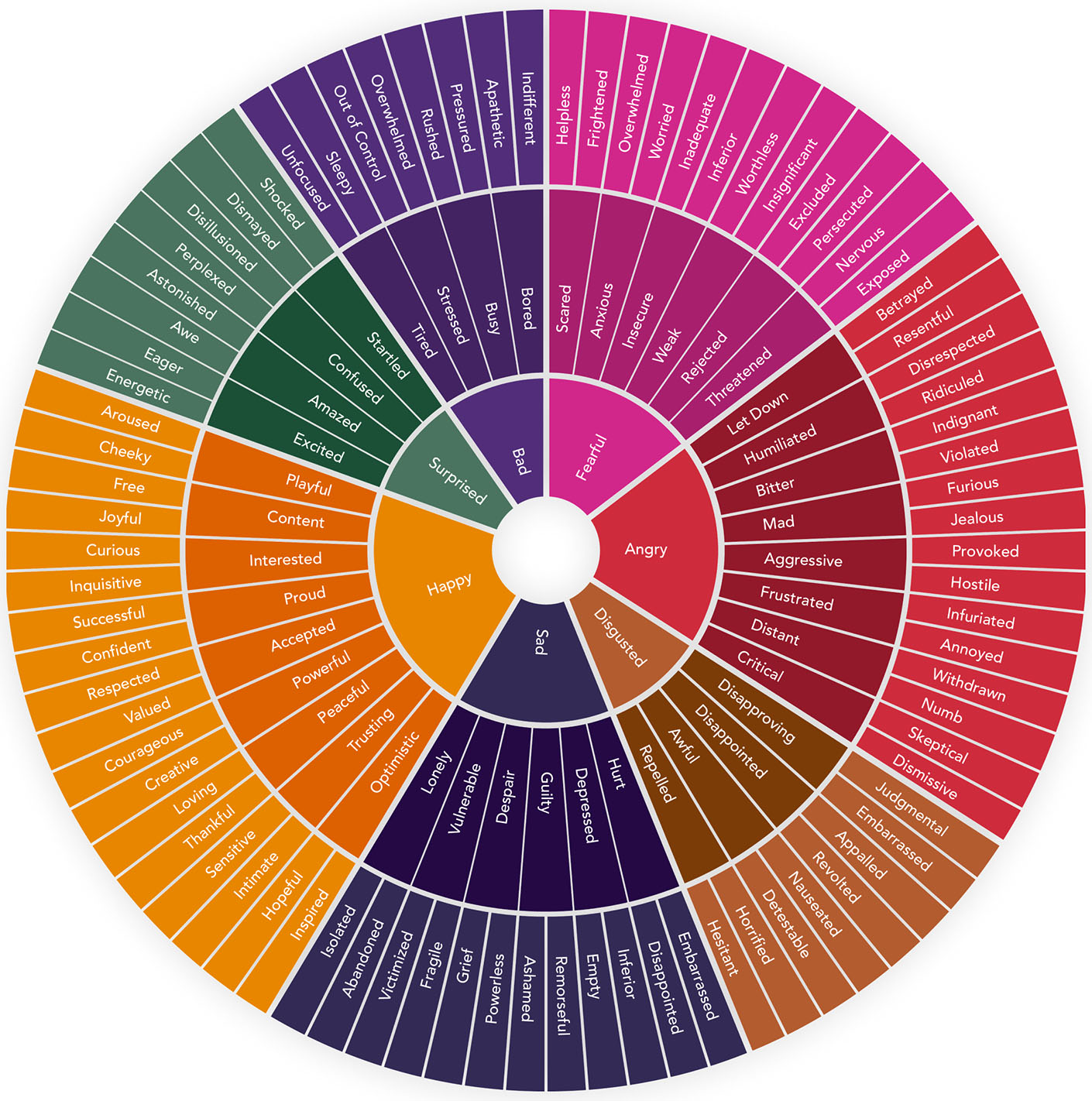
We have a nifty tool to do this called the feelings wheel - feel free to use it whenever you are in distress.
With a feelings wheel, you can more accurately define the emotion you are experiencing - the more accurate you get, the more you will be able to recognize where and what your emotions are stemming from.
For example, if you feel bad in an argument, you can turn to the feelings wheel and find the broad emotion of Fearful - from there you can get more detailed with words like worried or overwhelmed.
While it may not seem like a big difference, the nature of these descriptors are actually quite different.
This works the same way for anger - it can be further defined as distant, humiliated, or critical.
Each of these emotional terms have a different context, which is why being specific helps you find the connection between what's happening and what you're feeling.
Tip #2 - Connect Emotions with Actions
Anger and anxiety show up for a reason.
The specific emotion you may have picked from the feelings wheel might be connected with something you're thinking or experiencing.
It may stem from what you're thinking about, remembering, ruminating, or anticipating.
Those emotions might also stem from the context of your current situation - and if it possibly mimics situations you've been in before.
Specific names for your emotions are important clues for discovering why you're feeling them.
All it takes is 10 minutes of reflection - to ask yourself these specific questions when considering how you feel.
In or out of conversation, take inventory of the context surrounding your feelings:
Who?
What?
When?
Where?
Why?
For example:
Who: Davis
What:Raised his voice at me
When: Just now
Where: In our living room
Why: Because he is frustrated with his phone
Understanding these details can help you have a very specific conversation to address the issues sparking your emotions.
Now that you know exactly what you feel, and a better sense of what's causing it, it's time to manage it.
Tip #3 - Self-Soothe
Self-soothing is a crucial skill - not only in heated discussions, but in almost all relationships.
Essentially, it's finding independent methods of calming yourself down.
As a therapist, I can confidentially promote self-soothing as an efficient way to improve your quality of life.
When it comes to relationships, the Gottmans ( world renowned psychologist couple who specialize in relationship psychology), also encourage self-soothing techniques.
If you want to sustain your mental health, as well as your partner's, self-soothing will be crucial.
Luckily, you have several opportunities to soothe yourself - even before an argument happens.
Before
If you know you're getting into a rough discussion, it's best to prepare for it.
If you want to prepare what you will say, try writing it out on paper or your phone.
Taking the time to find exactly (1) what you want to say and (2) what you're looking to hear is conducive to having a healthy conflict.
If you want your body to be equally as prepared, take some time to do (1) deep breathing and (2) mindful meditation.
All you need is 5 minutes of self-soothing to calm your mind and body before the storm.
During
If you notice your blood boiling or your mind racing, it's probably best to do something about it.
Per the Gottman method, you may need time to step away from the situation until cooler heads prevail.
This does not mean just stepping away to ruminate on the conversation, but engage in something calming and distracting from the topic.
Return to the conversation when you feel your blood pressure drop and your rational thoughts coming back to the front of your mind.
After
It's important to self-soothe in the aftermath of a conflict, even if it is healthy.
Now that it's over, you have emotions to recognize, connect with action, and cope with.
I encourage you to take 15-20 minutes to reflect on the situation to understand and accept what happened.
If you find yourself ruminating for hours - or your body is in fight, flight, or freeze, then it's time to self-soothe.
When you've done your best to manage your anxiety and anger, both in the argument and after, it can allow you to share your feelings again if you so choose.
Tip #4 - Express Your Emotions
Now that you can define your emotions and manage them - you can share them with others.
If you're socially anxious, you might be reluctant to share due to a fear of judgment.
If you struggle with people-pleasing, then you might be too intimidated to tell someone that you're upset with them.
As a therapist, I can tell you that you have control over how you share your emotions.
To begin, it's important to frame your emotions with "I" statements.
Example: "I feel angry and hurt because you called me stupid which was mean and hurtful"
Feeling anxious or angry are not transgressions - so sharing them when holding someone accountable is completely natural and fine.
It's often healthy to express your feelings with someone you trust - it humanizes you.
Neglecting your feelings leaves them to fester in your mind - to accumulate until they combust.
Anger and anxiety need to be addressed head on, there's no way around it - they need a way out.
Final Thoughts
Your quality of life, as well as your relationships, can flourish when you learn how to manage your negative emotions - before, during, and after conversations.
Negative emotions are yours after all, and you get to determine how you respond to them.
If you can learn to listen to your emotions with respect and care, then you can do the same for others.
Remember, to manage anxiety and anger in your conversations:
#1 - Recognize Your Emotions
#2 - Connect Emotions with Actions
#3 - Self-Soothe
#4 - Express Your Emotions
